The tide is wrong and Danny Ferreira knows it before his feet hit the sand. He reads the water the way other people read a room — a glance, a recalibration, a decision already made. “We walk south,” he says, and we walk south.
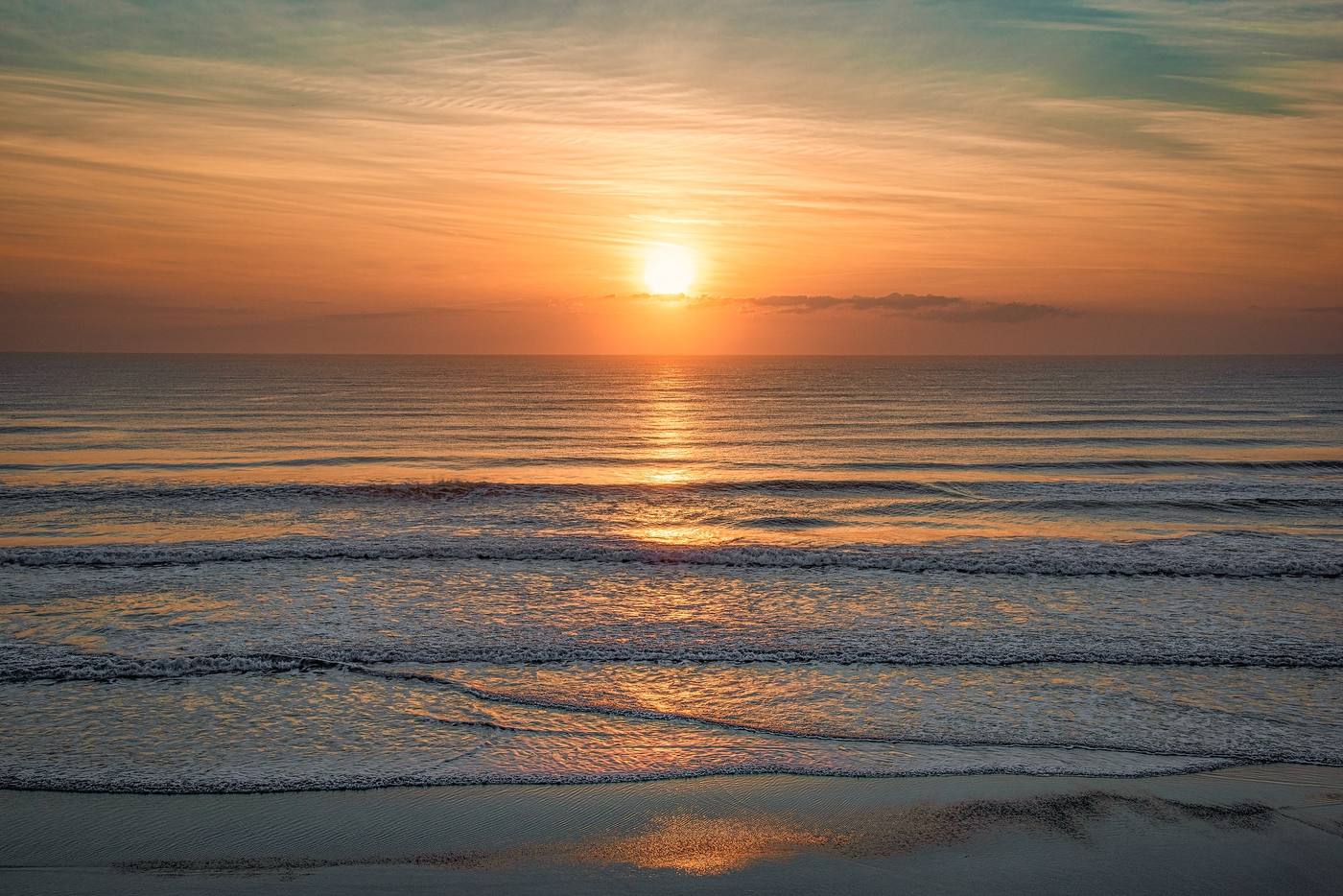
There is a stretch of beach in New Smyrna that does not appear on any map of famous waves. It has no name that tourists would recognize, no plaque, no surf cam beaming it to bored office workers in Ohio. To Danny it has been the most important place on earth for fifteen years, which is to say for most of his life. He learned to stand up on a foam board here at twelve, fell in love here at sixteen, and scattered his father’s ashes just past the second sandbar at twenty-four.
“People think a wave is the same wave,” he tells me, wax in hand, eyes on the horizon. “It’s never the same wave. The bottom moves. The sand comes and goes with every storm. You think you know a place and then a hurricane rearranges the whole floor and you’re a beginner again.”
The Town That Surfing Built, Quietly
New Smyrna Beach has a reputation it would rather not have — the statistics about sharks, the ones that make the national news every summer. Locals roll their eyes. They have been swimming and surfing these waters their whole lives. What the headlines miss is the thing that actually defines this town: a surf culture so deep and unbothered that it never needed to announce itself.
“You don’t move here for the waves. You move here and then the waves become the reason you can never leave.”
That culture runs through three generations of the same families. The kid sweeping up at the surf shop is the grandson of the man who shaped boards in his garage in the seventies. The woman who runs the coffee cart on Flagler learned to surf from the lifeguard who taught Danny’s father. It is a small place that holds its history close.
What Stays, What Goes
We talk about change, because everyone here talks about change. The new builds going up on the barrier island. The rents. The summer crowds that thicken every year. Danny is not naive about it — he has watched friends priced out, watched a favorite taco stand become something with a valet — but he refuses the easy nostalgia.
“The place is always becoming something,” he says. “The trick is to keep showing up. You keep paddling out and the ocean keeps reminding you what actually matters. Everything else is just noise on the beach.”
The set finally comes, an hour into our walk, a clean shoulder-high line stacking up over the bar he predicted. Danny is already paddling before I see it. He drops in, disappears into the pocket, and for four perfect seconds the man and the water are the same thing. Fifteen years, and he still whoops like it’s the first one.