There is a particular kind of joke that surfers from elsewhere have made about Florida for as long as surfing has been a thing one travels for. The joke goes something like this: the waves are knee-high. The water is brown. The wind is wrong. The reef is sand. The point breaks are jetties. The locals are too friendly. None of it is meant as a compliment, exactly, and almost all of it is true.
And yet. If you sit down with the modern record books and start counting, the answer that comes back is the one nobody quite expects. Florida — flat, fickle, the most-mocked surf coast in the United States — has produced more surfing world champions than any other state on the mainland. Not by a little. By a margin so wide that, depending on how you count, it isn’t really close.
Six surfers. Twenty-two world titles between them. From a state whose average wave, on most days, would not get a kid out of bed in California. That is the number to sit with for a moment before we try to explain it, because the explanation is harder than the number.
The Roster
Start with the names, in the order the trophies came in.
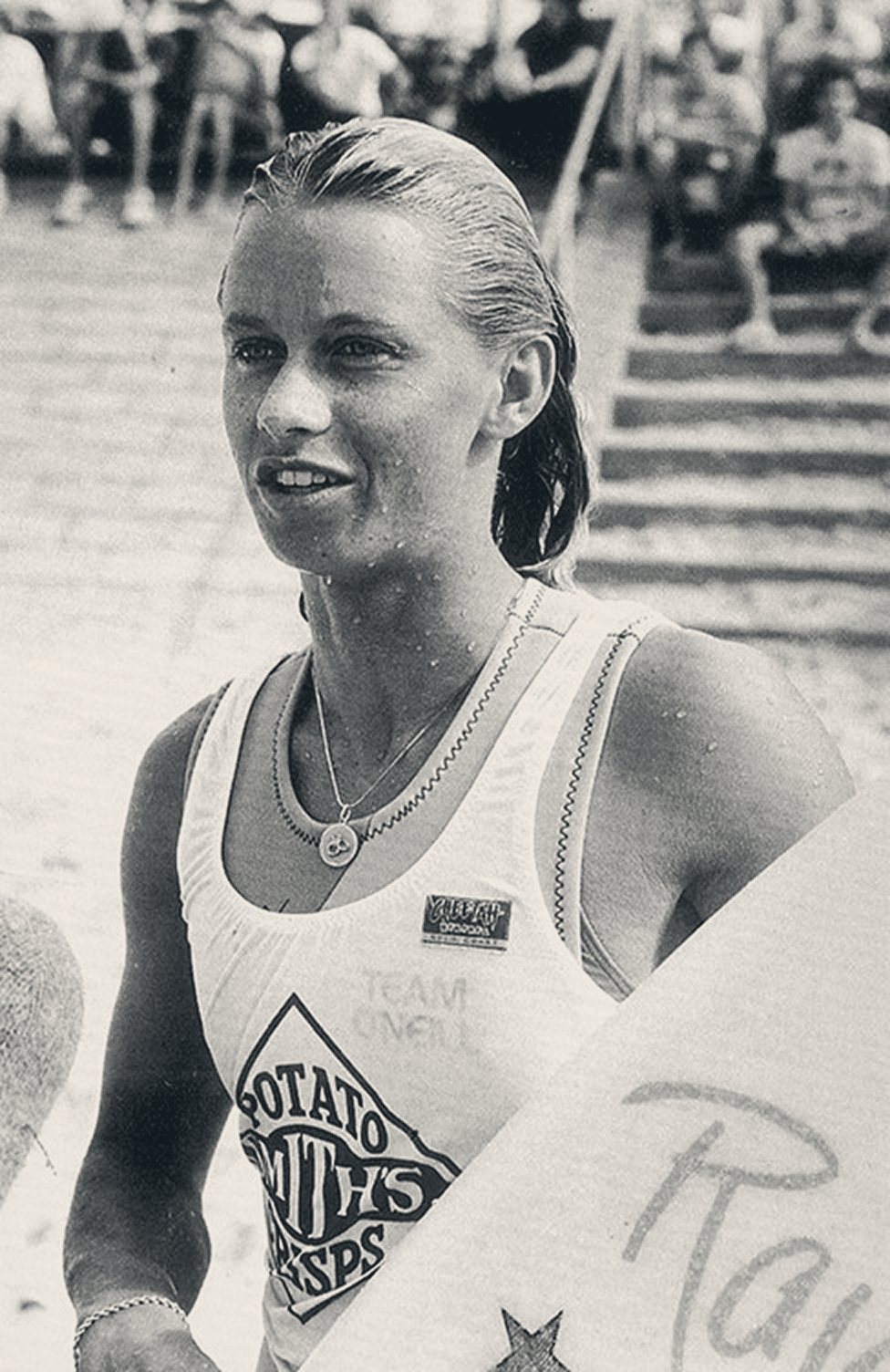
Frieda Zamba, of Flagler Beach, won the women’s world title in 1984, 1985, 1986, and 1988. She was, when she won her first, the youngest world champion in the sport’s history. She was also goofy-footed, five-foot-five, and from a town of fewer than five thousand people on a stretch of A1A that most surf magazines couldn’t have located on a map without help. Four titles in five years. The first generational dominance the women’s tour had ever seen.
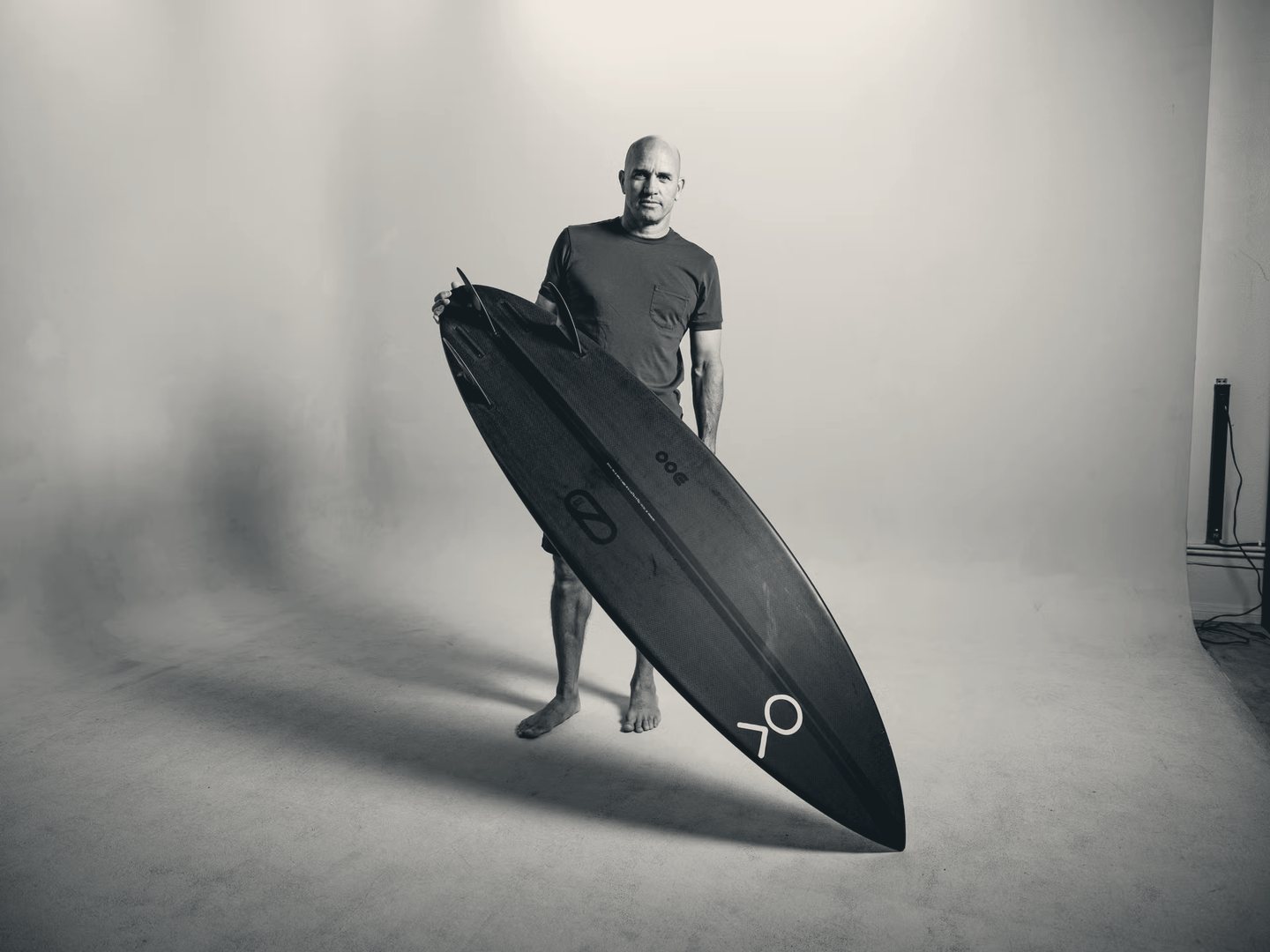
Kelly Slater, of Cocoa Beach, won his first world title in 1992 and his eleventh in 2011 — more than any other competitive surfer in the history of the sport, by a margin large enough that the conversation about second place becomes its own argument. There is a statue of him on the beach at Cocoa now, bronze, mid-cutback. It is the kind of thing that should feel ridiculous and somehow doesn’t.
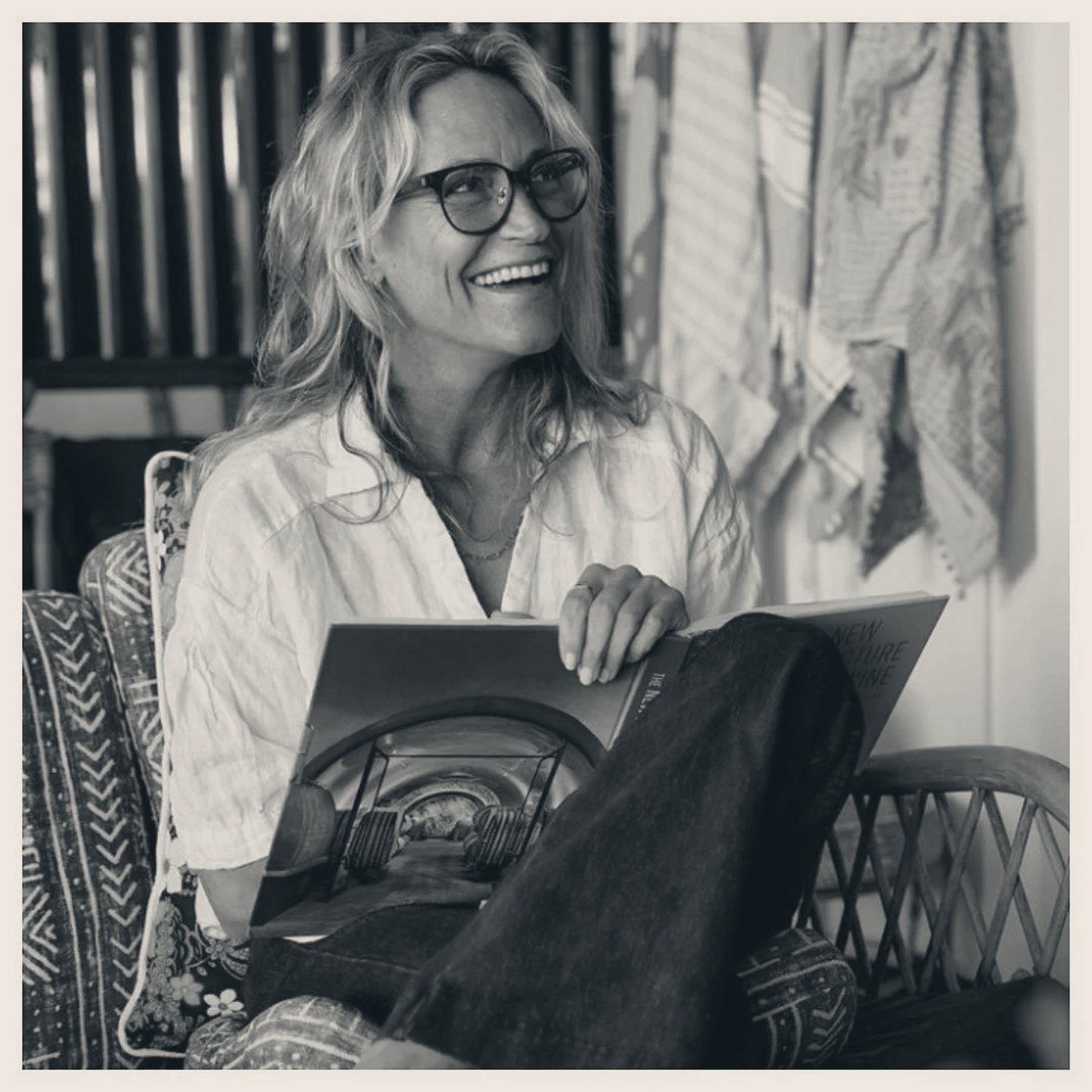
Lisa Andersen, who learned to surf on the sandbars of Ormond Beach before leaving home as a teenager, won four consecutive women’s world titles from 1994 through 1997. She was the first woman ever to ride for Quiksilver. The women’s line at Quiksilver — and then the broader category of women’s surf apparel as a real business — exists in significant part because she existed.
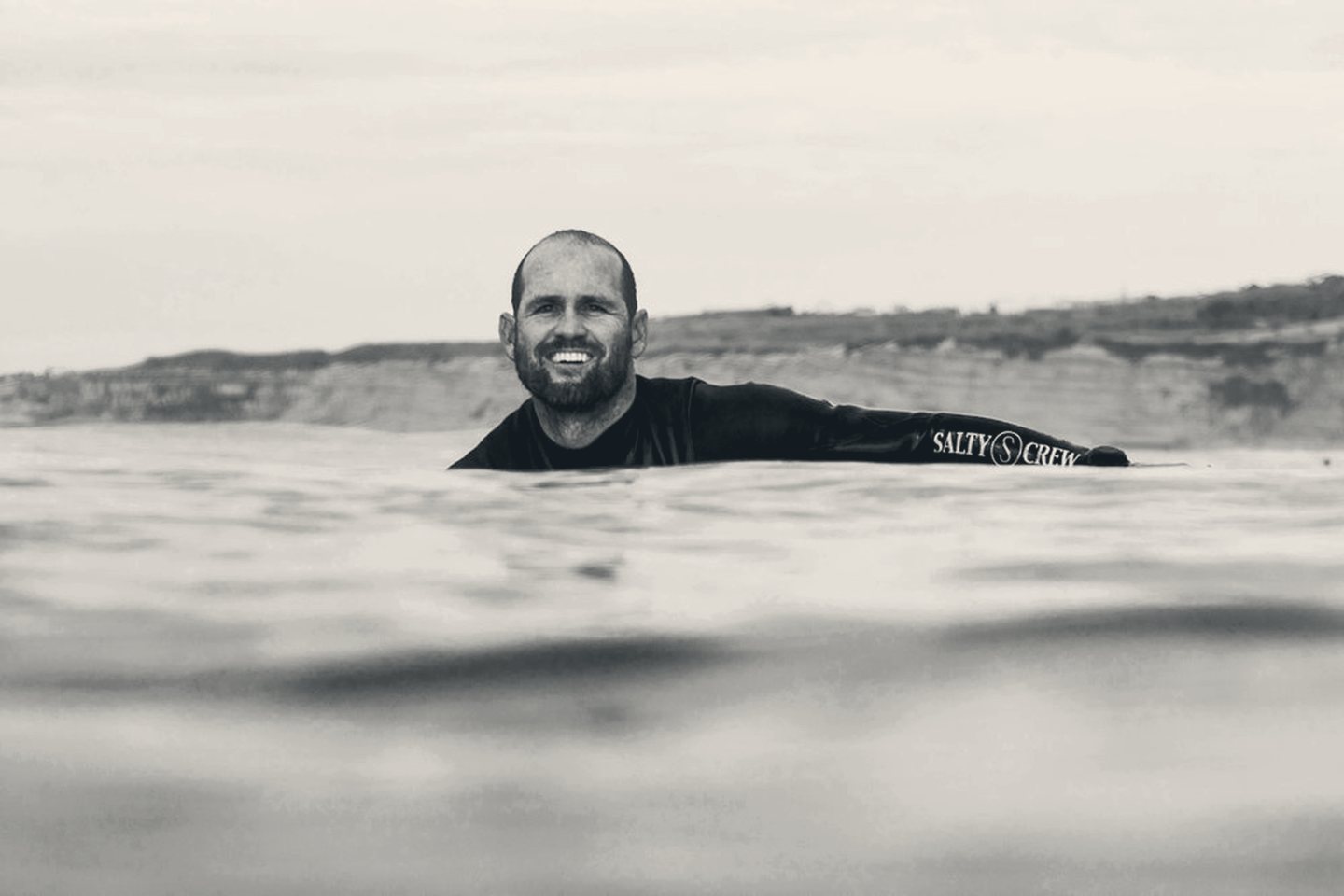
CJ Hobgood, of Satellite Beach, won the men’s world title in 2001, the year the World Trade Center came down and the tour scrambled to finish its schedule. His twin brother Damien finished his career holding what was, for a year, the highest grand-final score in pro surfing history. Their family produced two of the most respected surfers of their generation from a stretch of beach an hour south of Cocoa.
Justin Quintal, of Atlantic Beach near Jacksonville, won the men’s World Longboard title in 2019. He grew up cross-stepping on the boards Florida actually had waves for, on the small mushy stuff most shortboarders complained about, and turned that into a category dominance that, on the longboard side, is closer in feel to what Slater did on shortboards than anything else in the sport.
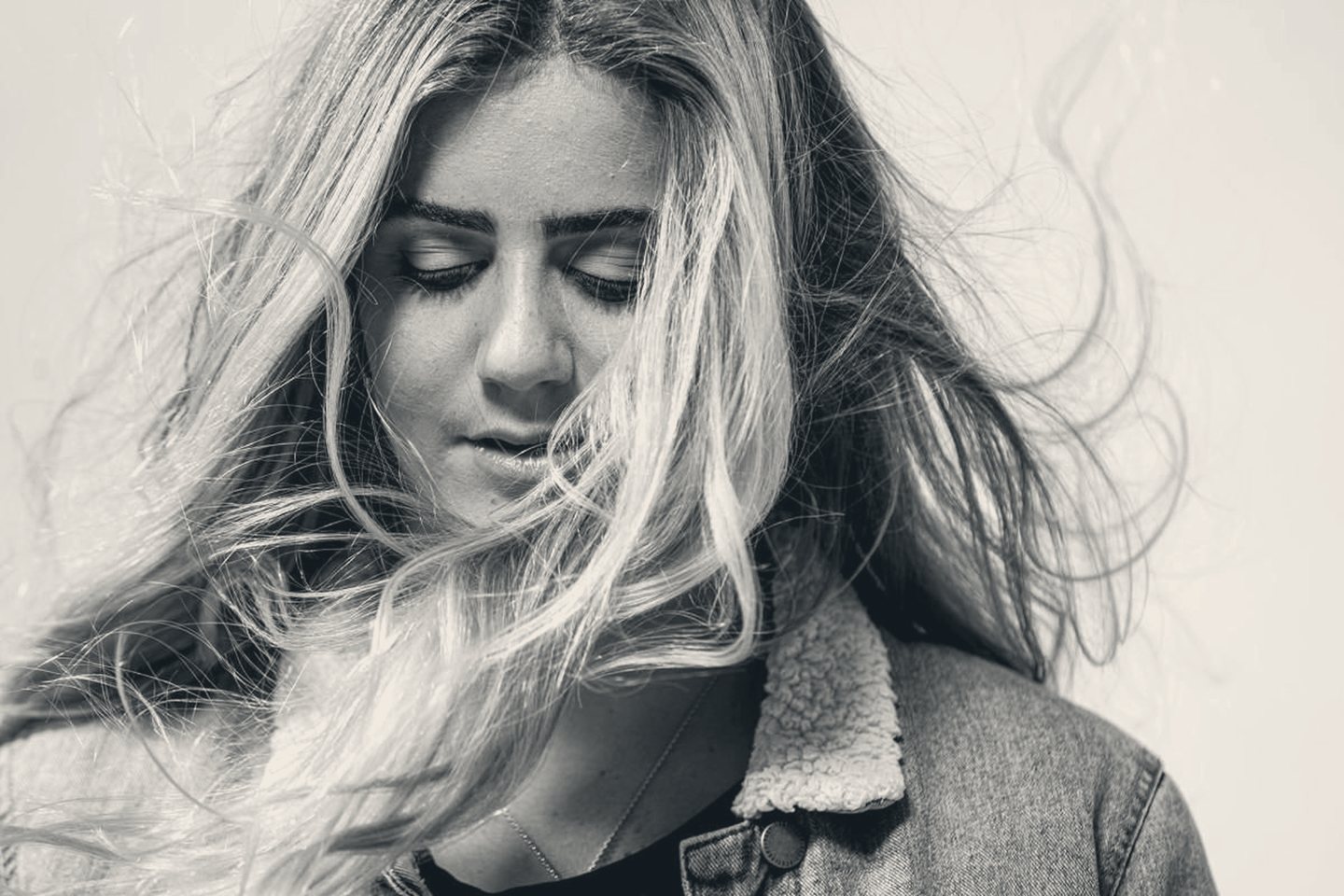
Caroline Marks, born in Boca Raton, sharpened at Sebastian Inlet, won the women’s world title in 2023 and the gold medal at the Paris Olympics in 2024. She was the youngest woman ever to qualify for the world tour. She closed a twenty-six-year gap between American women’s world titles — the gap that opened when Lisa Andersen stopped winning them.
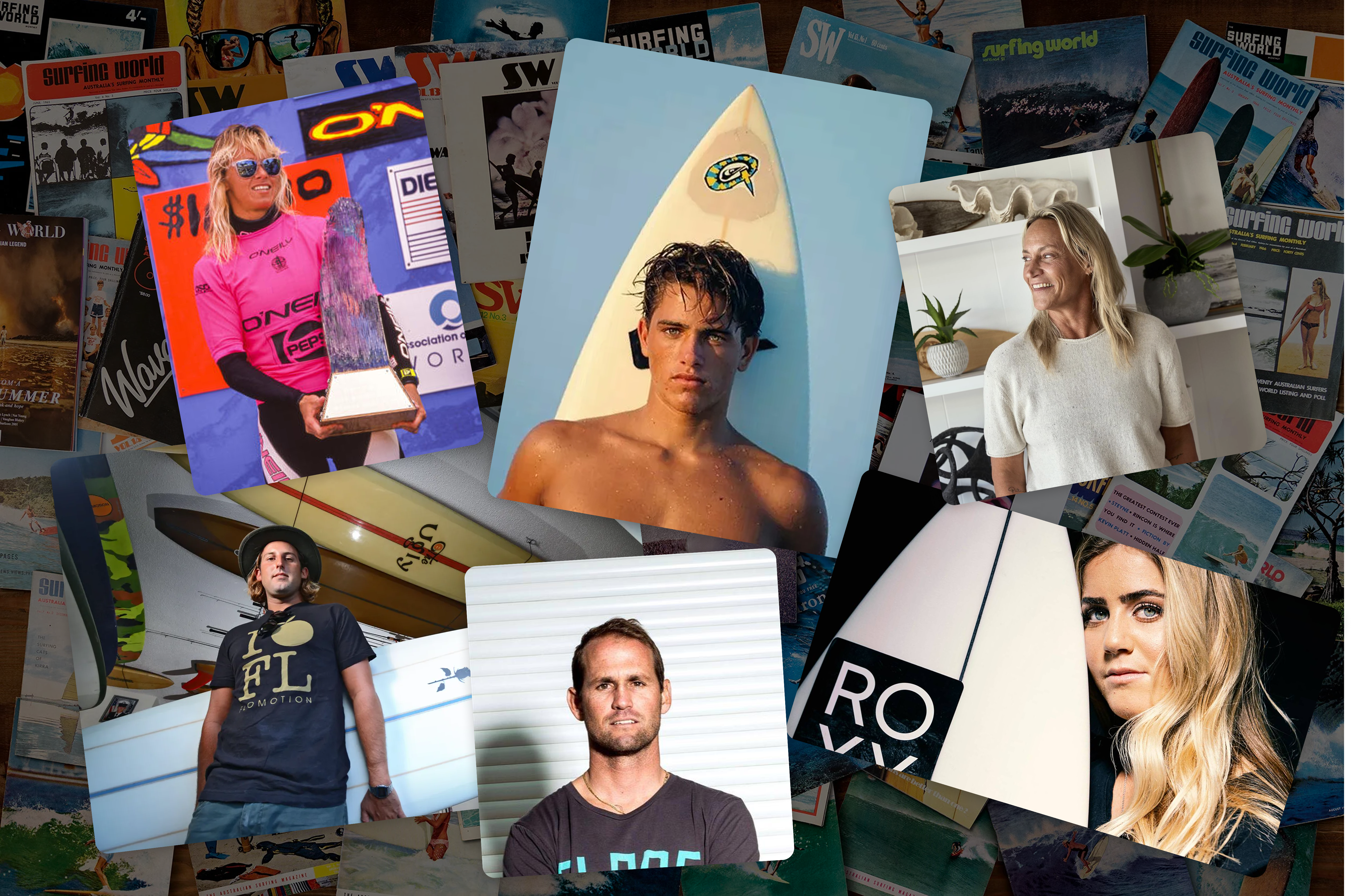
Six surfers. Twenty-two titles. From a state whose own most affectionate writers regularly describe its surf as “average,” “weak,” or “a closeout with extra steps.”
The Volusia Chapter
You can drive the women’s half of this story in twenty minutes. From the SHORES storefront on South Atlantic Avenue in Daytona Beach Shores, the route goes north up A1A through Ormond Beach, where Lisa Andersen grew up surfing the bars at Cardinal and Granada before the East Coast couldn’t hold her anymore, and continues north another twenty miles to Flagler Beach, where Frieda Zamba taught herself to surf on a coast that was, by every objective measure, not built for it.
Eight world titles. Two beaches. One stretch of road. Both surfers women, in an era when women’s surfing was treated by the broader industry as a hobby that occasionally produced photographs. They were not. They were the ones who built what came next.
The geographic compression of it is the part that should stop you. There are entire surf-rich regions of California, Australia, and Hawaii that have never produced a world champion in either discipline. Volusia and Flagler Counties together have produced two women’s champions with eight titles between them — on a coast that, when those women were learning, had effectively zero infrastructure for elite-level competitive surfing. No high-performance shapers within easy reach. No video crews. No pro-am circuit. No coaches. The waves are what they are.
There are entire surf-rich regions of California, Australia, and Hawaii that have never produced a world champion. Volusia and Flagler produced two, with eight titles between them, on a coast you can drive end to end before lunch.
And yet the two of them, working separately a few miles apart, won eight world championships in fifteen years. Eight. That is not a regional curiosity. That is the foundation of an entire generational shift in women’s surfing, and it happened on this coast, and the magazines that mattered at the time were almost universally based somewhere else.
The Space Coast Engine
The men’s half of the story runs ninety minutes south. Cocoa Beach, Satellite Beach, Indialantic — the stretch of barrier island that locals know as the Space Coast, named for the launch complexes that sit just over the river at Kennedy. Eleven world titles for Slater, one for Hobgood, and a generation of supporting players (Damien Hobgood, the Lopez brothers Cory and Shea, the Geiselman brothers Eric and Evan, more) who would have been their region’s standout surfer almost anywhere else.
The wave at Cocoa Beach Pier is not a great wave. Sebastian Inlet, an hour further south, is the best high-performance wave in the state by consensus, and it is still, on its best day, a small fast right that doesn’t hold size. The competitive infrastructure that grew up around those two breaks in the eighties and nineties — the Eastern Surfing Association junior contests, the local heats at every chance the calendar offered, the early Sebastian Inlet Pro events — turned what should have been a regional weakness into a forge.
If you can win a heat in Florida, the logic seemed to go, you can win one anywhere. Because in Florida, you have to actually win it. You can’t coast on the wave. The wave will not cooperate. The wave will give you ankle slop and a single shoulder-high reform if you’re lucky, and you will have to make every part of your three best rides count. The kids who came out of that system arrived at world-tour events better prepared for marginal conditions than almost anyone else on the planet.
The Theory
So why did this coast produce them? There is no clean answer, but there are honest pieces of one.
The first is repetition on bad waves. A Florida surfer paddles out, on average, in conditions that a Californian or an Australian would skip. Over a year, that means meaningfully more time on a board. Over a childhood, it means thousands more attempts at maneuvers that, in better surf, would be the highlight of a session and, in Florida, are simply what you do every day to find any rideable section. The skill ceiling of the wave is low. The skill floor of the surfer who learns on it is, paradoxically, very high. They have done the reps.
The second is the drive. Florida surfers grow up understanding that the wave at home is not the wave they will be judged on. Almost every world-tour-bound Floridian leaves at fifteen or sixteen — to Hawaii for the winter, to Australia for the spring, to California for the contests — and comes home in summer with whatever they learned. The home coast is the gym, not the stage. That cognitive separation, internalized young, produces a particular kind of competitor: one who treats every wave they get as practice and reserves their best for waves they have traveled to find.
The third is the community. The Eastern Surfing Association junior contests, running on every available swell up and down the coast for decades, gave Florida something California and Hawaii effectively didn’t need: a parallel competitive infrastructure that ran in marginal conditions and treated marginal conditions as the test. Eight-year-olds learned to read heat sheets. Twelve-year-olds learned to manage priority. Sixteen-year-olds had already lost a thousand heats and won eight hundred of them. By the time a Florida surfer made it to a world-tour event, the competitive math was second nature. Everywhere else, the surfing was the hard part. Here, the surfing was the easy part. The contest was the hard part.
And the fourth — and the one that magazines have spent thirty years dancing around — is hunger. California kids grew up in a culture that treated surfing as a birthright. Hawaiian kids grew up at the source. Australian kids grew up in a country that took surfing seriously as a national sport. Florida kids grew up explaining to people from somewhere else that yes, you can surf in Florida, and yes, the waves are real, and no, you have not heard of any of the people you should have heard of. There is a chip on the shoulder of an entire generation of Florida surfers, and it has been a remarkable competitive advantage.
Caroline Closes the Loop
When Lisa Andersen won her fourth and final world title in 1997, the American women’s tour had its standard-bearer. When she stepped back from competition, the standard-bearer position went unfilled for twenty-six years. The 1998 women’s title went to Australian Layne Beachley, and a long Australian and Hawaiian run followed — Beachley, then Stephanie Gilmore, then Carissa Moore, then Tyler Wright. American women contended, sometimes brilliantly, but no American won the world title between 1997 and 2023.
Then Caroline Marks. Twenty-one years old. Florida-born, Sebastian Inlet-sharpened. Beat Carissa Moore and Tyler Wright in the same finals weekend at Lower Trestles in 2023, two surfers she had lost to as a thirteen-year-old in her first world-tour event, and took the title. Lisa Andersen was in the crowd. The Florida flag flew above the family section. The next year Marks won Olympic gold in Tahiti.
It is hard to overstate how complete the loop felt. The last American woman to win the world title was a Floridian who had learned to surf on the sandbars between Ormond Beach and Daytona. The next American woman to win it, twenty-six years later, was a Floridian who had learned to surf on the sandbars at Sebastian Inlet. The two of them were in the same room when it happened. There are stories the sport writes for itself and there are stories the sport stumbles into, and this one feels like the rarest version of the second.
The Number, Honestly
One honest aside before we close, because we are not here to inflate things. Florida is not the world’s most decorated surf state. Australia, with seven titles for Layne Beachley alone and eight for Stephanie Gilmore, has produced more world champions than Florida by any honest count. Brazil, with its modern dominance through Gabriel Medina and his contemporaries, has produced more recent men’s titles than any other country. Hawaii, when you count it as a place rather than as part of any state, has produced multiple legends. The honest claim is American: on the mainland of the United States, no other state is close. California has produced one men’s world champion — Tom Curren, with three titles. That is the entire mainland competition.
What is unique to Florida, then, is not raw numerical superiority. It is the ratio. Six world champions, twenty-two titles, from a coast that most of the surfing world would not bother flying to. That is the actually surprising number. That is the one worth thinking about.
The Series
This article is the beginning of a longer SHORES project. Over the coming months we will publish six standalone profiles — one for each of the world champions named above — building out into a series we’re calling The Florida Six. Each profile will be researched, sourced, and written in the SHORES voice: less highlight reel, more sense of place. The arc of a career, the coast that made it, the people who were in the room.
The first profile, on Frieda Zamba, will run next. She is the most underwritten of the six — the women’s tour she dominated barely had press coverage, the sponsorship money that came to Andersen a decade later did not exist for her, and her place in the history of the sport is, in our view, more important than the typical surf-history treatment has given her credit for. Flagler Beach is forty miles up A1A from this office. We’re going to drive up there and start.
After Zamba: Lisa Andersen (Ormond Beach). Then Kelly Slater (Cocoa Beach). Then CJ Hobgood (Satellite Beach). Then Justin Quintal (Atlantic Beach / Jacksonville). And, to close the loop where the loop wanted closing, Caroline Marks (Boca Raton / Sebastian Inlet).
If the math says Florida is the surf-starved state that produced more world champions than any other on the mainland, the next obvious magazine question is: who were they, exactly? How did they do it? What did the coast give them, and what did they have to leave the coast to find? That is the conversation we want to have, one surfer at a time.
Twenty-two titles. Six surfers. One coast that, by every fair measure, had no business producing any of them. Start there. Then drive north.
World title counts, biographical details, and career timelines verified against the World Surf League public records and the Florida Surf Museum’s archives. The framing of this piece was prompted in part by Stab Magazine’s 2025 long-form essay How Did A Surf-Starved State Produce 22 World Titles? and the accompanying Stab No Contest episode featuring Caroline Marks and Ashton Goggans touring Florida’s surf coast. Their reporting is recommended; this is our take on a publicly known history. SHORES is not affiliated with Stab.